Skip to Main Content

Leading with Impact: Aspire CFO Michael Wimbish Named CFO of the Year

We’re thrilled to celebrate Michael Wimbish, Aspire Public Schools’ Chief Financial Officer, who has been named CFO of the Year by the San Francisco Business Times! This award recognizes outstanding financial leadership, innovation, and a commitment to mission-driven impact.

At Aspire, Michael’s work exemplifies how thoughtful financial stewardship can directly support scholars, communities, and the resources they need to thrive. Under his leadership, Aspire continues to be able to strengthen programs, expand opportunities, and ensure sustainable growth across our schools. As he says,

I try to start from a place of “yes,” and then work backwards to see what’s possible.

This recognition carries even greater significance because the CFO of the Year awards celebration benefitted  Larkin Street Youth Services, which provides housing, education, and critical support for young people experiencing homelessness. A great reminder that strong leadership in finance—and in community—can create meaningful opportunities for young people who need it most.

Read the full story in the San Francisco Business Times here.

Celebrating Our 2025 Don Shalvey Award Winners

Celebrating Our 2025 Don Shalvey Award Winners

The Don Shalvey: Changing the Odds Award honors graduates who exemplify Aspire’s mission through community impact, perseverance, and purpose. Named after Aspire’s founder, this award uplifts alumni who continue to lead with heart, committed to both their post-secondary dreams and giving back to their community.

This year’s awardees reflect the power of full-circle impact. From an educator helping her former students grow into teammates, to a recent college graduate stepping into the classroom, to a teacher honoring the legacy of those who shaped his journey.

Rocio Castanon – Aspire Lionel Wilson College Prep Academy Alumna

A proud daughter of immigrants and first-generation college graduate, Rocio Castanon has been a steady presence at Aspire Monarch Academy for the past 15 years. After earning her A.A. in Child Development from Merritt College and her B.A. in Human Development from CSU East Bay, she returned to Monarch, the school her children once attended, to give back to the community that helped raise her.

As a computer skills teacher, Rocio helps students build confidence as creators, not just consumers of technology. She reminds them every day that they are “deeply loved, that they matter, and that it’s always okay to ask questions, speak up, and make mistakes along the way.”

Rocio still carries with her the lessons and encouragement of the many Aspire teachers who shaped her, including Ms. Aguilar, whose third-grade class made her feel seen and cared for, Mr. Peterson, who introduced her to digital design, and Mr. Hasan, who taught her to know her history and herself. She credits many others who pushed her to grow and dream bigger.

Today, Rocio works alongside some of her former students who now serve at Monarch themselves! Her mother has been with Aspire for 25 years, and her sister is now in her third year, making Rocio part of a proud three-generation Aspire family.

Cathalina Cordero – Aspire Benjamin Holt College Prep Alumna 

Cathalina Cordero’s Aspire journey began in kindergarten and continued through Aspire Vincent Shalvey Academy, Aspire Ben Holt Middle School, and Aspire Benjamin Holt College Prep Academy. By the time she graduated high school, she had completed more than 500 hours of community service, led numerous school-based initiatives, and earned over 60 college units through dual enrollment at San Joaquin Delta College. Cathalina went on to UC Davis, graduating in just two years with degrees in Psychology and Sociology. Her commitment to service never wavered—she led community projects as Vice President of Service in Circle K International and supported college access efforts as a tour guide and outreach assistant. This school year, Cathalina returns to Aspire as an Education Specialist Teacher at Aspire Port City Academy, while also pursuing a Doctorate in Counseling Psychology at the University of the Pacific. With every step, she continues to uplift the next generation of Aspire scholars.


Sergio Uzziel Martinez – Aspire Pacific Academy Alumnus

Since graduating from  Aspire Pacific Academy, Sergio Uzziel Martinez has remained deeply rooted in his commitment to education and growth. He has earned both his bachelor’s and master’s degrees and recently completed his first year as a full-time English teacher—a role he takes on with gratitude and pride. For Sergio, teaching is not just a profession; it’s a way to “honor the educators who supported and believed in him.” Through his work in and beyond the classroom at  Aspire Ollin University Prep Academy, he aims to carry their legacy forward and create the same kind of transformative experiences for his students.

These outstanding alumni continue to reflect Aspire’s mission in action, showing what’s possible when education, community, and leadership intersect. We are thrilled to celebrate their stories!

EdSurge: Schools Can’t Find Teachers. Do States Need More Credential Rules or Fewer?

Teacher Preparation

Schools Can’t Find Teachers. Do States Need More Credential Rules or Fewer?

“COVID opened the floodgates for what was allowable,” one education leader says.

Original article found here.
By Daniel Mollenkamp
June 12, 2025

For Aspire Public Schools in Los Angeles, the turnaround took a couple of years.

Coming back from the pandemic, the 11 charter schools serving about 4,400 students saw a steep drop in credentialed teachers sticking with their roles. So relying on a program at Alder Graduate School of Education that pays graduate students to work as teachers-in-training, Aspire built an internal pipeline of new educators.

The program has been successful, according to Christopher Carr, executive director for Aspire in Los Angeles. The retention rate for teachers in the network has soared from around 60 percent to 90 percent, Carr reports. The biggest success of the school’s internal pipeline has been in special education, which suffered the highest personnel loss after the pandemic.

But perhaps the best benefit has been that this allows incoming teachers to absorb the culture of Aspire. Aspire focuses on “antiracism,” according to Carr. He credits this approach with helping the network to increase its number of Black teachers, by allowing schools to consciously recruit them. A couple of years ago, around 7 percent of Aspire’s teachers were Black. Now, that number has doubled, to around 14 percent.

But it’s still really hard to attract math and science teachers for middle school and high school: “It’s almost impossible to find a physics teacher right now,” he says.

Still, to the extent Aspire schools have been successful recruiting and keeping teachers, the chain is in a rare position.

In California, like elsewhere in the country, teacher pipelines are drying up.

Nationally, states have relaxed educator credential requirements to help schools navigate workforce issues. But without greater investment into alternative teacher-training pipelines, some experts worry that schools’ struggle to find and keep teachers will only get worse.

But at the same time, some states have had to make rules more strict: Texas has reversed course on educator credentials, from 2001 — when the state loosened regulations and functionally allowed teachers-in-training to rely on fully online programs — to this year, when it passed a new law to reduce reliance on underqualified educators.

State experiments with strict and lenient credential rules have not yet yielded definitive solutions.

Comparative Advantage

California has some of the most robust teacher qualification requirements, says Beatrice Viramontes, executive director of Teach for America Bay Area.

The state’s education system desperately needs quality teachers in schools, but the traditional credential requirements are expensive and include a lot of steps for prospective teachers, Viramontes says. It creates an additional barrier to boosting staff numbers — along with other hurdles like pay — and schools are having a difficult time attracting teachers, especially among younger generations. Gen Z and millennial teachers tend to leave the field earlier. It means that, as older teachers retire, it’s harder to replace them with quality new hires, Viramontes says.

Solving the problem has required schools to take on a DIY spirit.

“There’s a lot of energy in getting creative, because the current process is cumbersome,” Viramontes says.

Teach for America is an alternative pathway into teaching that works in partnership with teacher credentialing programs. Since the pandemic, schools have started creating their own in-house alternative training programs, too. Some of these try to even usher students currently working to earn a bachelor’s degree through the credential process.

Viramontes praises some approaches as “innovative.” For instance, there’s Rivet, a paraprofessional program that works to bring students pursuing a bachelor’s into classrooms; and TeachStart, a teacher academy that specializes in pathways to credential substitute teachers.

But others have warned about teacher quality issues when schools have to rely on substitutes and other uncredentialed instructors.

California doesn’t have good metrics for weighing the quality of these alternative programs, Viramontes concedes. Yet, anecdotally, she says there’s a steady flow of demand from schools for these programs, which she argues speak to “a yearn” for more teachers.

Precisely how this affects schools depends on where they are.

In rural areas of the central coast region of California, online options have made certification more accessible, says Caprice Young, CEO and superintendent of Navigator Schools.

A charter network of four schools, Navigator has around 2,200 students in transitional kindergarten through eighth grade, and around 300 staff (about 100 are teachers). Three of the network’s schools are rural, all sitting about 40 or 50 miles outside of San Jose, with a fourth school in Hayward, wedged between San Jose and Oakland. For teachers, the schools largely rely on the Cal State University system’s TEACH program, which has a virtual credentialing option.

It’s common for Navigator schools to cultivate teachers internally, Young says. With the end of federal pandemic relief funding, Navigator schools have focused on hiring tutors and paraprofessionals who can transition into teaching roles, and they have put energy into teacher coaching programs.

But long term, this could be a problem. Tutors and paraprofessionals are now moving into vacant teaching positions, and without additional federal dollars, the schools aren’t filling as many as many of the paraprofessional jobs.

Still, the schools find themselves adding grade levels, Young says. With nearby schools dwindling because of enrollment declines, the pool of teachers they can hire has swelled.

But as other states have learned, finding more teachers isn’t the end of the woes.

Carrots and Sticks

In Texas, there’s another problem.

Recently, the governor signed H.B. 2, which bans uncertified teachers from instructing in “core” subjects (reading, math, science and social studies) in public schools by the 2029-2030 school year.

Texas has a relatively deregulated teacher preparation certification landscape, says Jacob Kirksey, an assistant professor in Texas Tech’s College of Education. A waiver from the District of Innovation policy from before the pandemic has meant that Texas public school districts don’t have to get approval from the state education agency for hiring uncertified teachers if they can demonstrate they have a shortage, Kirksey says.

Some of Kirskey’s work has suggested that, as of two years ago, half of new hires lacked credentials, a trend that disproportionately affects rural areas. Teacher shortages have been the worst in math and sciences for middle and high school, he says, a pattern that’s also worse in rural regions.

Many states appear to be following Texas’ old lead in allowing more uncertified teachers to head classrooms, Kirskey adds. In 2024, more than 365,000 teachers across 49 states plus D.C. were working without being fully certified for their positions, according to the Learning Policy Institute. And some states like South Carolina and Indiana recently passed legislation loosening credential requirements.

While this may boost the number of bodies in classrooms, it also raises questions about the quality of instruction.

Kirksey’s work has highlighted the connection between uncredentialed teachers and student achievement declines. With an average uncertified teacher, the students fall behind about three months in math and four months in reading within a single school year, he says.

Observers praised the new law in Texas for also making funds available to assist underqualified teachers in the classroom to gain credentials, which they argue will ensure teacher quality while keeping the pipelines of educators flowing, in calls with EdSurge. The law also supports university-based educator preparation programs.

Rolling Boulders Uphill

Some think that solving the problem of teacher shortages and educators who lack credentials will take more effort.

It’s not enough to rely on legislators alone to fix the problem, argues Gemar Mills, executive director of College Achieve, a network of 11 charter schools spread across three cities in New Jersey.

In New Jersey, some attempts, predating the pandemic, have kept up the flow of teachers into schools.

For example, there’s Trio Academy, a program that supports students without a college degree, helping them earn the degree and then pursue a teaching credential.

There’s also a state program — run by the New Jersey Center for Teaching and Learning — meant to boost the supply of science teachers. The program puts certified teachers through a physics graduate program before assisting them in obtaining a credential to teach the subject. Even before the pandemic, Mills embraced this; and he recalls a gym teacher completing the program and becoming a physics instructor. In recent years, the program expanded from physics into other sciences.

But the pandemic supercharged the search for alternative sources of teachers: “COVID opened the floodgates for what was allowable,” Mills says.

These days, in New Jersey, credentialing sits somewhere between the extremes of California and Texas. The pandemic inspired leniency in the state, prompting policymakers to relax standards for credentialing. Typically, becoming a credentialed teacher there involves meeting a minimum GPA, scoring well on a basic skills test, going through teaching practice and getting a college degree. But under the “limited” certification — a five-year program that started in 2022 — teachers can earn a temporary credential by completing three of those criteria.

Ultimately, Mills’ schools saw a surge of college graduates, longtime teachers’ assistants and substitutes all pivoting into full-time teaching.

But there are still challenges.

For instance, schools are capped so that only 10 percent of teachers can have that lenient credential. College Achieve has maxed out. Plus, finding science, math and special education teachers is still onerous, Mills reports.

School leaders are eager to get more teachers. But solving the problem that will require more innovative and effective certification pathways, Mill says.
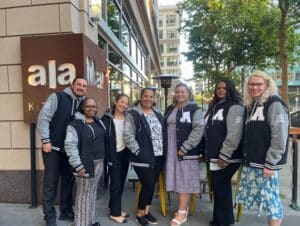


Celebrating our 15+ year teammates at Aspire Public Schools Bay Area

Last week, Aspire Public Schools Bay Area proudly celebrated a group of extraordinary teammates at alaMar Dominican Kitchen in Oakland. It was an evening focused on honoring those who have dedicated over 15 years of commitment and leadership at Aspire Public Schools.

15+ years represents early mornings, consistent dedication to students, and an enduring belief in the power of education to disrupt cycles of injustice. These educators have not only helped build schools, but they have also created spaces where young people can question, grow, and thrive.

Over the years, they have stood on the front lines of public education in California. They have navigated the 2008 U.S. recession, shifting policies, and a global pandemic. And through it all, they have remained committed to a vision of schooling where every student is seen, affirmed, and prepared to think critically and act boldly in the world.

Over 30 Aspire Bay Area educators have 15+ years in our organization, and last week, Executive Director Javier Cabra Walteros gave the new members of this 15+ crew their well-deserved letter jacket.


Congratulations to our 2025 Teacher and Teammate of the Year award winners!

Aspire Public Schools is proud to announce the 2025 Teacher and Teammate of the Year award winners! Now in its second year, this recognition celebrates exceptional educators and staff across our three regions—Bay Area, Central Valley, and Los Angeles—who embody our mission and values. This year’s honorees were selected from a competitive pool of nominations submitted by teammates, students, families, and alumni. Each winner has made a profound impact on their school community through dedication, leadership, and a commitment to student success.

Bay Area


Teacher of the Year: Jenny Sar
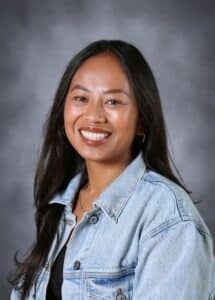
At Aspire Golden State Preparatory Academy, Jenny Sar serves as a 9th and 12th-grade math teacher, Math Department Lead, and Leadership teacher. Her innovative approach to education is exemplified by the student leadership program she initiated, culminating in the school’s first homecoming pep rally. Jenny reflects, “It was incredible to see our students step up, showcase their leadership, and bring so much energy and creativity to the event.”

Teammate of the Year: Mina Vega
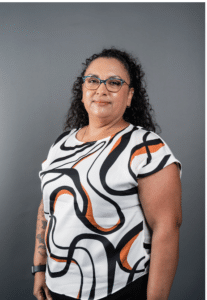
With 21 years of dedicated service at Aspire Monarch Academy, Business Manager Mina Vega has been a steadfast presence in the school community. She cherishes the opportunity to welcome new TK and kindergarten students each year and take pride in watching them grow and transition to middle school. Mina’s commitment to the school’s mission and her nurturing spirit have left an indelible mark on countless families.

Central Valley

Teacher of the Year: Genesis Abdul-Rashid
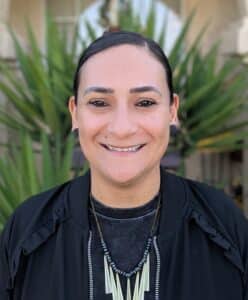
Genesis Abdul-Rashid, an Education Specialist at Aspire Benjamin Holt Middle School, is celebrated for her dedication to inclusive education. One of her most memorable experiences was organizing the Ruby Bridges Walk, an event that united students and families in a powerful demonstration of community and historical awareness. Genesis remarks, “Witnessing our community come together to honor a pivotal moment in history was truly inspiring.”

Teammate of the Year: Starrlight Murray
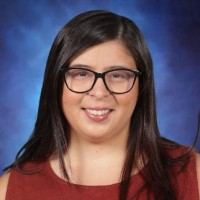
Starrlight Murray, Business Manager at Aspire Capitol Heights Academy, is known for her vibrant energy and deep connections with students. Recalling a cherished memory, she shares, “A group of my students convinced me to participate in our school talent show. I was incredibly nervous, but a third grader said, ‘Ms. Starrlight, just get out there and dance like no one is watching!’ That moment reminded me why I love working with kids—their honesty, encouragement, and the unforgettable memories they help create.”

Los Angeles

Teacher of the Year: Nadean DeLeon
At Aspire Pacific Academy, 6th-grade Math and Science teacher Nadean DeLeon is recognized for her commitment to academic excellence and student engagement. She proudly highlights her students’ achievements in the Aspire Math Field Day Competitions, where they secured championships in 2017, 2018, 2019, and 2024. Nadean’s dedication to fostering a love for math and science has empowered her students to excel.

Teammate of the Year: Eduardo Ramirez
Eduardo Ramirez, Office Assistant and Family Coordinator at Aspire Antonio Maria Lugo Academy, is celebrated for his efforts to build strong family-school connections. One highlight of his tenure was organizing a trip to a Dodgers game for students with excellent attendance and their parents. Eduardo shares, “It was awesome to see the smiles, not just from our students, but also from parents who were experiencing their first-ever game. Moments like that remind me why we do this work.”

We extend our heartfelt congratulations to these outstanding individuals. Their unwavering dedication and impactful contributions continue to inspire and uplift the Aspire community.

Marking a Leadership Transition: Thank You, Mala

Today, we celebrate Aspire’s incredible leader, Mala Batra, who has dedicated the last 14 years to Aspire Public Schools, with the past six as CEO. This week, Mala announced that she will be transitioning out of her role as CEO at the end of this school year. While this marks the end of an extraordinary chapter, we are thrilled that she will remain part of our community in an advisory capacity as we move forward.

During her tenure, Mala has led with heart, courage, and a deep commitment to educational equity. She has guided Aspire through pivotal moments with clarity, care, and an unwavering dedication to our scholars. Mala’s leadership not only broadened opportunities for our scholars, but also helped shape the very fabric of Aspire’s work and purpose.

On behalf of the Aspire community, we extend our deepest gratitude to Mala for her extraordinary service. Her impact will be felt for years to come.

Thank you, Mala!

Aspire Central Valley Executive Director Tony Solina Recognized as CCSA’s Equity and Innovation Leader of the Year

We are thrilled to celebrate Aspire Central Valley Executive Director Tony Solina, who has been named the 2025 Hart Vision Equity and Innovation Leader of the Year by the California Charter Schools Association (CCSA)!

This prestigious award recognizes one charter leader in California who champions equity, innovation, and systems change, collaborating with educators and communities to create meaningful impact. Tony, a dedicated Aspire teammate for over twenty years, has spent his career ensuring every scholar is prepared for success, especially in his home community in the Central Valley.

Congratulations, Tony! Your leadership and commitment inspire us all.

Watch the video celebrating Tony’s impact here.

Ribbon Cutting Marks Opening of Aspire APEX and Stockton Secondary Academy’s New South Stockton Campus


Photo credit: Heavy Crown Media

Aspire Central Valley recently celebrated a significant milestone with the ribbon-cutting ceremony for its newly renovated Aspire APEX Academy and Aspire Stockton Secondary Academy in South Stockton! The state-of-the-art campus within the San Joaquin Housing Authority development marked a new chapter for Aspire as it continues to bring high-quality, tuition-free education to the Sierra Vista community. This vibrant event showcased Aspire’s commitment to “Empowering Minds. Transforming Futures.” with a focus on providing comprehensive educational opportunities for students from transitional kindergarten through 12th grade.

The ceremony was filled with energy and enthusiasm, featuring inspiring speeches by school officials and student representatives who spoke passionately about the new campus’s potential. Following the ribbon-cutting, attendees were invited to tour the facility, where they explored classrooms, student resources, and community spaces designed to foster a nurturing and innovative learning environment. The campus was full of excitement reflecting the optimism and promise of a new learning hub for the San Joaquin Valley.

As part of its holistic approach to education, Aspire APEX and Aspire Stockton Secondary Academy will offer extensive programs that cater to students’ academic and personal growth. Thanks to partnerships with local organizations, the schools provide dual-enrollment opportunities through San Joaquin Delta College, health career pathways with Modesto Junior College, and an engineering academy program in collaboration with the University of the Pacific. Aspire also offers programs tailored to support families, such as free before-and-after-school care with the Boys & Girls Club and parent education classes, ensuring parents and students have the resources they need to thrive.

Firmly embedded in the Central Valley for over 20 years, Aspire Public Schools operates 16 schools serving over 7,000 students in the region. The new campus will not only meet the educational needs of Stockton families but also introduce a new career pathways program to inspire high school students interested in teaching and education-related fields. This program will help address teacher shortages while creating pathways to rewarding careers for graduates.

The Aspire APEX and Aspire Stockton Secondary Academy campus is a testament to Aspire’s commitment to academic excellence and community development. Located at 2410 Belleview St., Stockton, CA, the campus is open for enrollment and welcomes families to come and experience firsthand the transformative impact of a quality education. For more information, visit aspirepublicschools.org.

Aspire Public Schools Receives $3.9 Million Grant to Grow and Develop Diverse Leaders in Education

The Diversity in Leadership Institute (DLI) partners with Loyola Marymount University to offer a 16-month fellowship cohort for diverse educators seeking administrator credentials.

FOR IMMEDIATE RELEASE
July 29, 2024

Media Contact:
Barbara Roy
(818) 261-9292
barbara@larsonpr.com

July 24, 2024Aspire Public Schools has been named the lead recipient of the California Teaching Commission (CTC) Diverse Education Leader Pipeline Initiative grant, in partnership with the Diversity in Leadership Institute (DLI) and Loyola Marymount University. The grant, totaling up to $3.9 million, aims to train, place, and retain diverse and culturally responsive administrators and education leaders to enhance student outcomes in public schools throughout the state.

Aspire Public Schools will oversee two separate grants, each with a different school serving as the lead Local Education Agency (LEA). Aspire Firestone Academy will lead the Southern California consortium, which includes all 11 Aspire Los Angeles schools, Bright Star Schools, New Los Angeles Charter School, ICEF Public Schools, and Perris Unified School District. Aspire Lionel Wilson College Prep Academy will lead the Northern California consortium, encompassing all 9 Aspire Bay Area schools and all 16 Aspire Central Valley schools, Rocketship Public Schools, Voices Academies, Envision Public Schools, and Sequoia Union School District. These partnerships highlight the collaborative nature of the initiative and the broad impact it aims to achieve.

“Aspire has a long track-record of supporting the professional growth of our team members, from pre-teacher programs to graduate-level teacher residencies. The Diverse Education Leader Pipeline Initiative grant will advance Aspire’s commitment to create pathways for teammates that are authentic to their identities and aligned with their career development aspirations, without worrying about financial barriers,” said Mala Batra, CEO of Aspire Public Schools. “This will further our efforts to establish diverse leadership pipelines that reflect the demographics of the communities we serve, which is essential for creating empowering and culturally responsive learning environments.”

The Diverse Education Leader Pipeline Initiative grant addresses the significant lack of Black and Brown leadership in education across the state. In partnership with DLI, the grant supports individuals with teaching credentials in obtaining administrator credentials through a 16-month fellowship that combines in-person and virtual components, with credentialing provided by Loyola Marymount University. Fellowship participants receive mentoring support extending beyond the fellowship by an additional year, focusing on culturally responsive school leadership.

“The Diverse Education Leader Pipeline Initiative grant is a transformative step toward closing persistent student equity gaps and increasing diversity within the TK-12 school administrator pipeline,” said Laura McGowan-Robinson, Founder and CEO of the Diversity in Leadership Institute. “The grant will empower aspiring leaders from underrepresented backgrounds, equipping them with the tools and opportunities needed to effect meaningful change in our communities.”

The grant awards $30,000 per fellow, eliminating the financial burden on participants and their schools. DLI will continue to seek additional funding to cover any remaining gaps, ensuring the program remains fully accessible and free to participants. The grant funding opens up eligibility for teammates from the consortiums to participate in the DLI cohorts. The grant will cover cohorts starting in the fall of 2024, 2025, and 2026, eliminating any additional fees for participants and the associated costs to their schools.

The grant provides up to 62 fellowship seats, valued at $1.86 million, for the Southern California consortium and up to 69 fellowship seats, valued at $2.07 million, for the Northern California consortium, ensuring comprehensive support for aspiring education leaders across California.


About Aspire Public Schools:
Aspire Public Schools operates 36 schools across California dedicated to preparing students for college, careers, and life. Aspire focuses on providing high-quality education to underserved communities and fostering a diverse and inclusive environment for all students.

About Diversity and Leadership Institute (DLI):
The Diversity and Leadership Institute is committed to promoting diversity and leadership in education. By providing fellowships and support for aspiring administrators, DLI aims to create a pipeline of diverse education leaders equipped to meet the challenges of today’s educational landscape.

About Loyola Marymount University

A top-ranked national university rooted in the Catholic, Jesuit, and Marymount traditions, LMU is committed to fostering a diverse academic community rich in opportunities for intellectual engagement and real-world experience. Our three campuses are rooted in the heart of L.A. a global capital for arts and entertainment, innovation and technology, business and entrepreneurship.

LA School Report | Counselor’s view: Why schools must diversify their post-secondary options and realize that one path does not fit all students

COMMENTARY

Original article here.
By Ivonne Polanco
Sr. Regional Program Manager for Post-Secondary Success
Aspire Public Schools Los Angeles

July 2, 2024

Photo of Ivonne Polanco from Aspire Los Angeles.In the realm of high school counseling, the traditional narrative has often centered around the four-year college experience as the sole path to success. However, as demands of the workforce change, it’s time to recognize that there’s not a one-size-fits-all approach to post-secondary education. To ensure equitable support for all students, schools must adopt a multi-faceted approach to post-secondary success — to provide a range of options that mirror the diversity of the student body.

This holds particular significance in light of the recent FAFSA crisis and its ongoing and future repercussions on low-income students. By providing robust career exploration and planning resources, high schools can help students make informed decisions about their future pursuits, taking a proactive step towards mitigating the financial burden of student debt on future generations.

One of the key strategies we’re implementing at Aspire Public Schools, where I work, is building post-secondary and career exposure early on in a student’s high school journey. We’re not just waiting until senior year to discuss college options; instead, we’re integrating post-secondary education and career planning into the fabric of our students’ daily experiences.

Beginning freshman year, students are engaged in discussions about their future paths, and we’re celebrating alternative options such as vocational training and community college alongside the traditional college route. We’re also not relying on colleges to teach critical thinking skills and antiracist practices; instead, we’re implementing comprehensive programs within our curriculum to foster these essential skills and perspectives well before they set foot on a college campus.

Here’s how we’re doing this in practice:

Exposing students through dual enrollment programs. By partnering with institutions like LA Trade Technical College, we’re offering our students the opportunity to take college-level courses while still in high school. These courses not only earn them credits that are transferable to four-year universities but also expose them to career paths and industries they may not have considered otherwise. I’ve seen how early exposure is invaluable in helping students make informed decisions about their future.

Addressing the financial barriers that often accompany post-secondary education. Through dual enrollment programs, we’re not just providing students with a head start; we’re also streamlining the path to college completion and alleviating financial strains along the way. The state of California is also prioritizing this approach, through programs like Golden State Pathways Program, which provides high school students with seamless pathways to college by offering college-level courses that count for both high school and college credit.

Fostering holistic career development through early exposure and practical experience. One major objective is to broaden students’ exposure to diverse career paths. At the heart of this effort is rolling out programs that let students do career assessments, so they can figure out their strengths, interests, and what kind of careers might suit them best. Departing from the antiquated notion of leaving career decisions solely to the college years, our aim is for students to graduate equipped with a strong academic background and the technical skills needed to thrive.

To realize this vision, we are fostering avenues for internships and work-based learning experiences during high school. This empowers our students to graduate not only with a robust academic foundation but also with the practical skills essential for success in their chosen fields.

It’s important to emphasize that our goal isn’t to discourage students from pursuing four-year institutions. Rather, it’s about ensuring that they have all the information and resources they need to make the best decision for their future. We’re dispelling the myths and misconceptions surrounding community colleges, recognizing that they can offer rigorous academic programs and valuable opportunities for personal and professional growth.

As counselors, our role is not to impose our own aspirations onto students but to empower them to explore their options and make informed choices. Whether it’s a four-year university, a community college, or a vocational program, what matters most is that students find the path that aligns with their interests and goals and allows them to thrive to live a fulfilled life.

Cultivating curricula that fosters critical thinking and antiracist practices. In shaping our academic programming, our foremost aim is to equip scholars with critical thinking skills that foster deep understanding through an antiracist lens.

Through programs and courses spotlighting Black, Native, Latinx and LGBTQ experiences, our scholars emerge from our schools imbued with a profound sense of confidence, empowering them not only to excel in college but also in any other avenue of post-secondary education or vocation they choose to pursue.

The traditional dichotomy between four-year colleges and alternative pathways is outdated and limiting. Let’s embrace a more holistic approach to post-secondary education, one that recognizes the diverse talents and aspirations of our students. By expanding access to dual enrollment programs, prioritizing avenues for internships and work-based learning experiences during high school and providing an equity-centered curricula that fosters critical thinking, we’re empowering our scholars to chart their own paths to success. After all, in a world where the only constant is change, flexibility and adaptability are the true keys to success.

Ivonne Polanco is a Senior Regional Program Manager for Post-Secondary Success at Aspire Public Schools in Los Angeles, California. Prior to that she was a College Counselor and Dean of College Success at Alliance Technology Academy in Los Angeles. She holds a master’s degree in secondary school administration and principalship from Cal State University Dominguez Hills and a Bachelor of Arts from the University of Southern California.